More than one thing can be true at once.
Lateral intelligence is a working framework for understanding, sense-making, and collaboration when a challenge cannot be explained adequately through one frame alone.
A business decision may be operational, financial, technological, relational, cultural, symbolic, and personally experienced at the same time. Each layer can reveal something useful. None automatically explains the whole.
The framework does not ask people to treat every impression as fact. It asks them to make more of the field visible, distinguish different kinds of information, and remain accountable to what happens when an interpretation becomes a decision.
Expanded perception becomes useful when it has a return path.
Within HUEMUNS, that return path moves from encounter to understanding, planning, execution, measurement, and correction. The chamber may open another way of seeing. The work beyond the room determines whether that way of seeing can produce useful, responsible change.
A name for what the work was already revealing.
I began using the term lateral intelligence to describe a pattern I encountered repeatedly through music, art, creative direction, and long-term collaboration with teams.
Important insight did not always arrive through analysis alone. Sometimes a sound changed the rhythm of attention. A material made an assumption visible. Humor loosened an overcontrolled exchange. A metaphor allowed people to approach something that direct language had flattened.
These moments did not prove that a particular interpretation was correct. They expanded what could be noticed and discussed. Their value depended on what happened next: whether people could separate observation from interpretation, decide responsibly, act, and revise their understanding in response to evidence.
Lateral intelligence became the language for that capacity—to move across relevant layers while preserving their differences.
Why linear models remain necessary
Linear reasoning is essential for engineering, logistics, finance, production, and accountable execution. It helps establish sequence, causality, ownership, and measurement. Lateral intelligence does not replace it.
Its role is complementary. In complex human systems, a technically correct plan can still fail because history, trust, identity, incentives, language, or meaning were treated as peripheral. Lateral intelligence asks: What else is operating here, and how would we know?
Hold the layers.Do not collapse them.
The framework begins by making different forms of information distinguishable. A layer is a lens for inquiry—not a claim to hidden truth.
01Material + operationalConditions that can be observed and measured.
02Relational + culturalConditions produced between people and cultures.
03Symbolic + narrativeMeaning carried through story, image, and language.
04ExperientialWhat a participant notices—and chooses to share.
Material + operational
Physical conditions, economics, technology, timelines, policies, resources, constraints, observable behavior, and measurable results.
Relational + cultural
Roles, incentives, patterns of interaction, shared history, norms, language, trust, disagreement, and the conditions affecting collaboration.
Symbolic + narrative
Metaphors, images, rituals, stories, organizational myths, public meaning, and the frames through which people interpret change.
Experiential
What each participant personally notices, senses, questions, or associates—and chooses to bring into the shared inquiry.
Clarity does not come from forcing the layers into agreement. It comes from seeing where they reinforce, complicate, or contradict one another—and knowing which claims require further evidence.
Disciplined openness.
Multiple layers remain present
A financial fact does not erase a cultural meaning. A felt response does not override a material constraint. Relevant layers are held in relationship without being treated as interchangeable.
Insight may move sideways
Analogy, rhythm, juxtaposition, material, image, movement, and pause can reveal patterns that direct pursuit has missed. The route may be non-linear; the resulting claim still requires examination.
Participation can generate knowledge
People may notice different things when they make, move, listen, compare, or respond together. Participation creates observations and questions—not automatic conclusions.
Coherence is not forced consensus
A coherent account can include dissent, uncertainty, and unresolved tension. The aim is not to make everyone agree; it is to make the relevant conditions sufficiently visible for responsible action.
The world tests the interpretation
An experience may reveal a possibility. Execution, evidence, and consequences determine whether the interpretation should continue, change, pause, or stop.
Expansion without inflation.
It is
- A way to examine complex challenges through several relevant lenses.
- A discipline for separating observation, interpretation, decision, and evidence.
- A complement to analysis, expertise, and operational planning.
- A framework meant to be tested and corrected through practice.
It is not
- A claim that intuition is evidence.
- A method for diagnosing participants or assigning hidden motives.
- A belief that every perspective is equally factual.
- Proof that an intense moment will create durable change.
- A substitute for scientific, legal, clinical, technical, or cultural expertise.
Observation
What occurred or was directly recorded?
Interpretation
What might it mean, and what remains uncertain?
Decision
What responsible action follows from the present understanding?
Evidence
What happened after action—and what must now be corrected?
The framework becomes less rigorous when poetic language is allowed to conceal unsupported claims. Its purpose is the opposite: to expand inquiry while making the status of each claim clearer.
The experience is where the work begins.
HUEMUNS chambers use music, art, material, story, play, and shared attention to help people encounter a real challenge through more than one layer.
Participants are not directed toward a predetermined revelation. They may participate, observe, decline, question the framing, and decide what their own experience means. The chamber composes conditions for inquiry; it does not claim ownership of the answer.
Expand what
can be
perceived
together.
- Encounter
- Understand
- Plan
Test what
can be
built
responsibly.
- Execute
- Measure
- Correct
Evidence from the world returns to the next inquiry. Correction is part of the method, not evidence that the method failed.
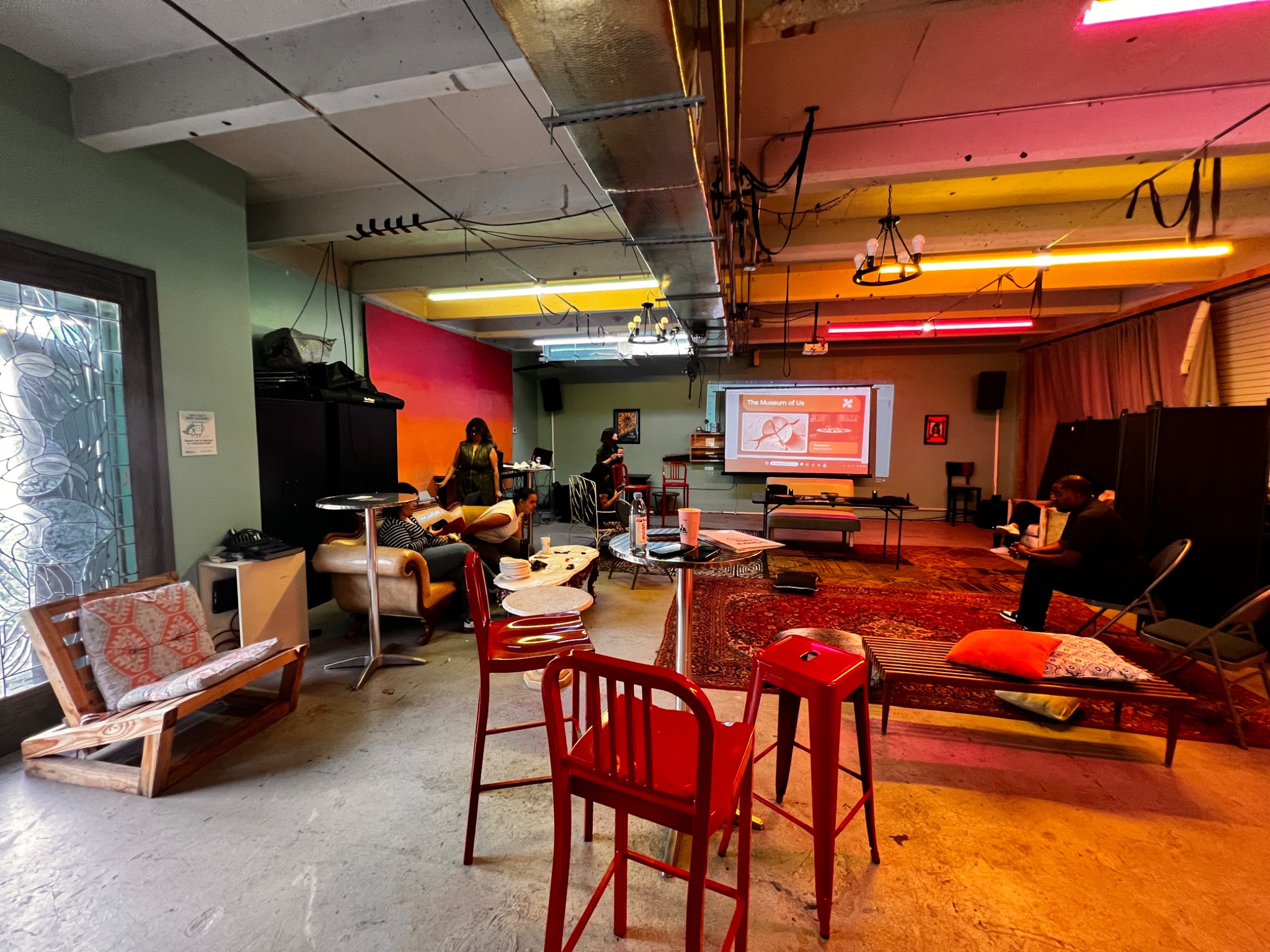
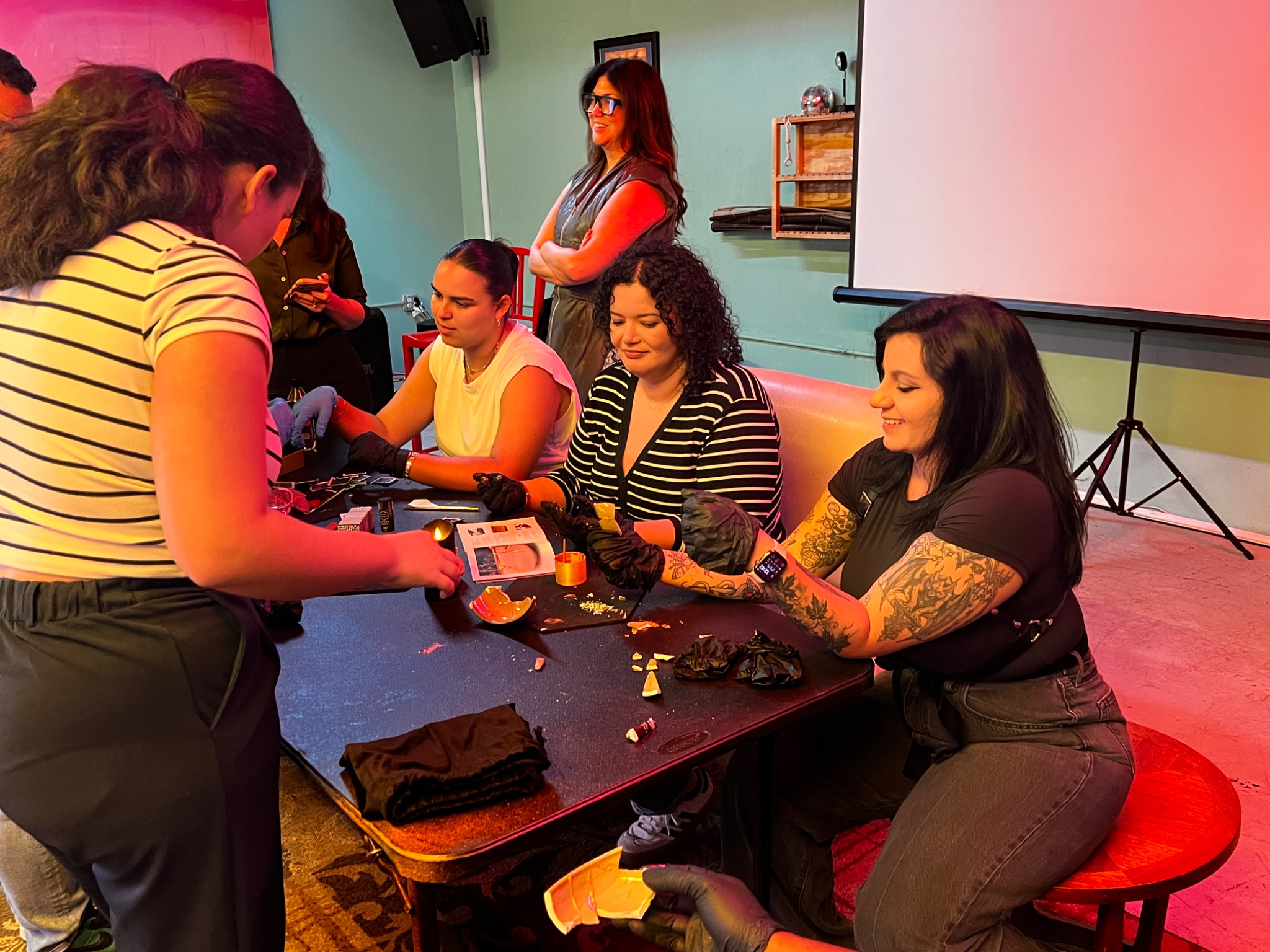
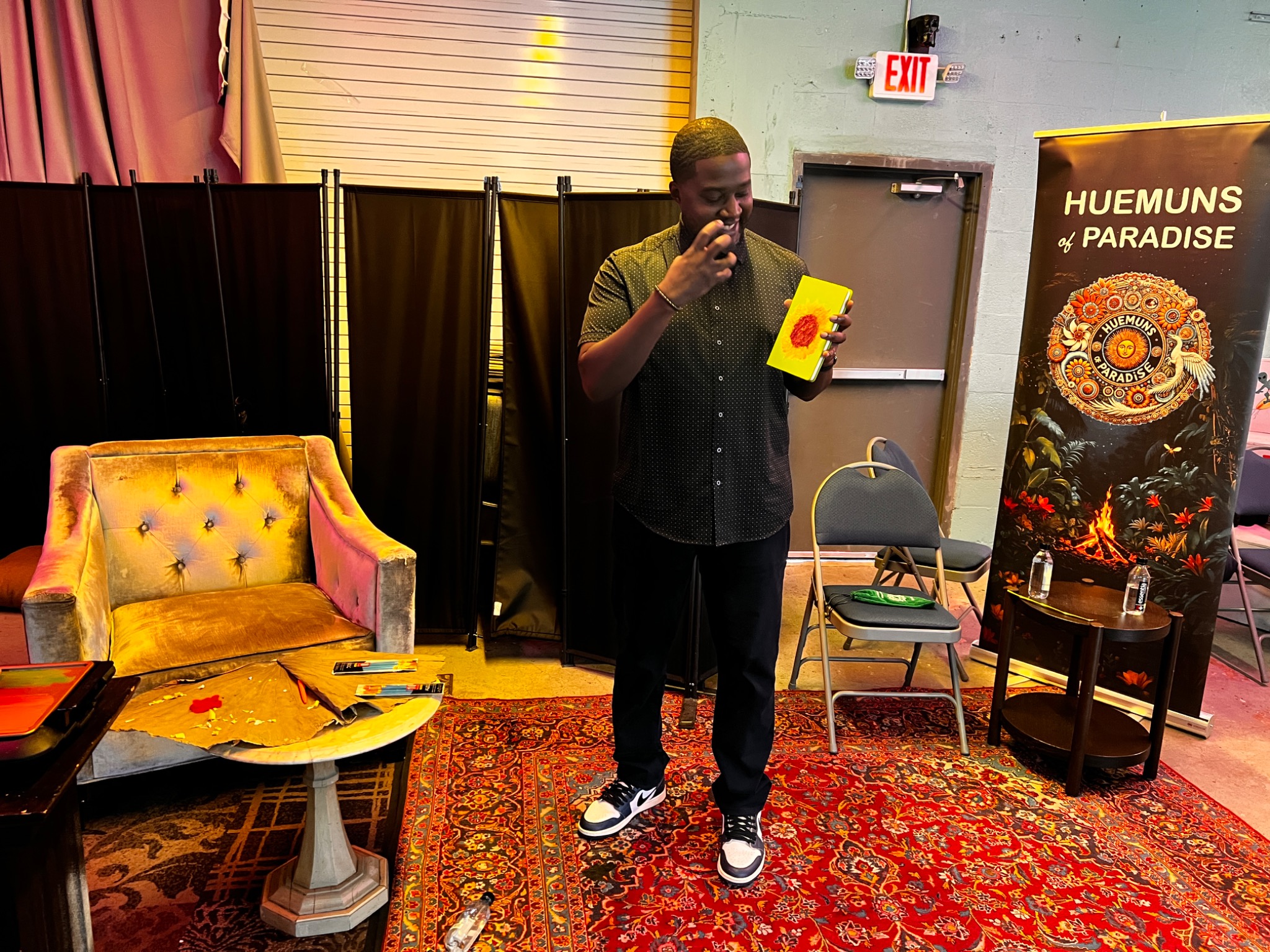
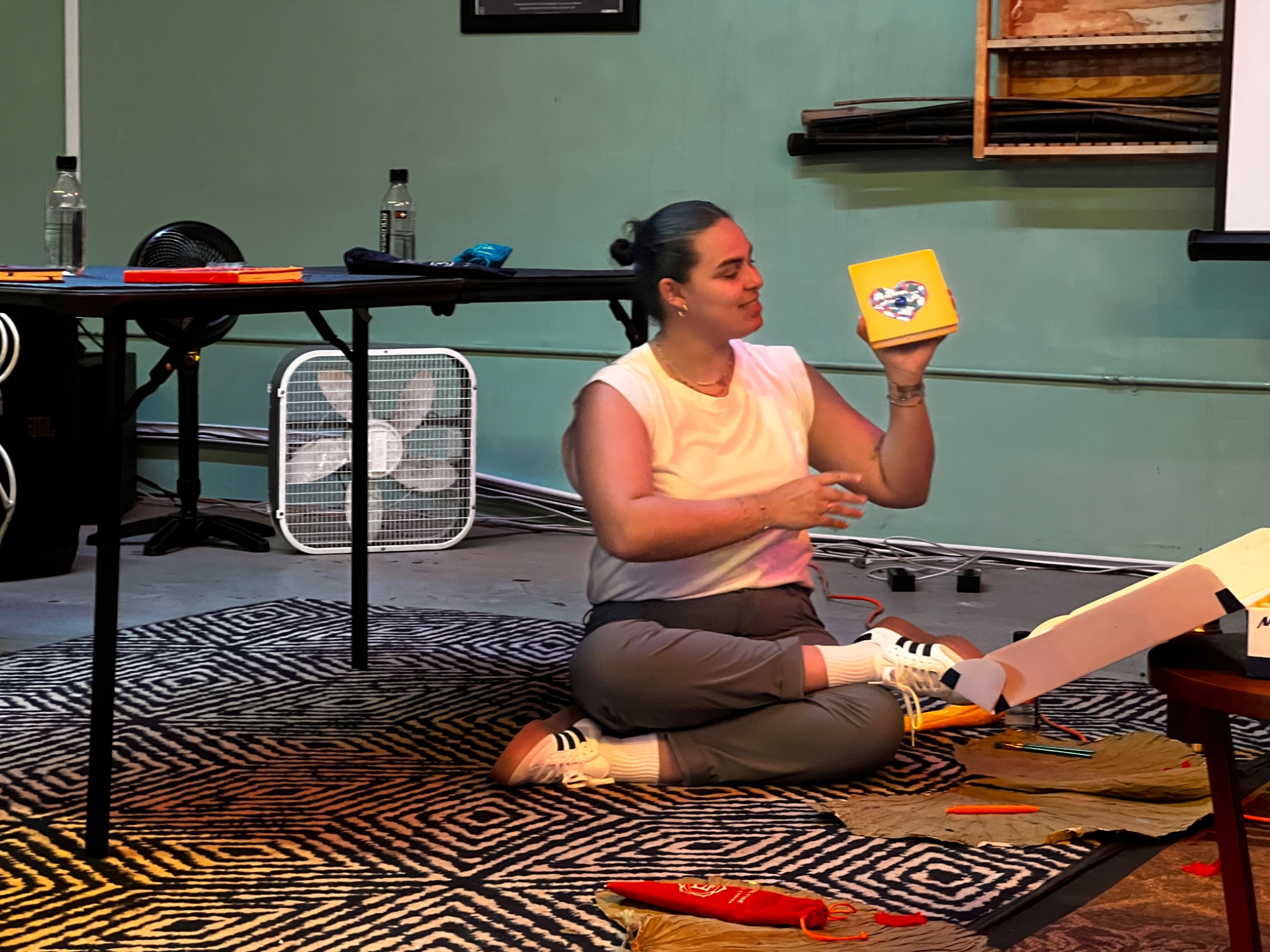

HUEMUNS chamber · Norwegian Cruise Line Onboard Revenue · Wynwood, Miami · December 2025
In this documented organizational setting, the chamber became foundational to subsequent plans, concepts, and campaigns. The team’s later business result belongs to the team; the chamber’s independent causal contribution has not been isolated. Lateral intelligence requires that distinction to remain visible.
Where multiple layers shape the outcome.
Organizations and teams
Strategic decisions often fail when human conditions are treated as an afterthought. Lateral intelligence can help teams examine metrics, constraints, culture, narrative, incentives, and lived experience before choosing an accountable course of action.
Art and culture
Art can operate as more than an object or message. It can become a shared field of inquiry in which meaning is not simply delivered but encountered and made in relationship.
Technology and design
Technology changes behavior, language, authorship, access, power, and expectation. Lateral intelligence helps evaluate a system not only for capability and efficiency, but also for the human and cultural conditions it creates.
Public and civic systems
Challenges affecting collective life rarely belong to one discipline. The framework can support clearer public understanding by keeping factual conditions, competing interpretations, human consequences, ownership, timelines, and correction visible together.
More perception must not mean less freedom.
A method concerned with human perception must be especially careful about consent, interpretation, power, and the boundary between shared inquiry and private experience.
Your experience belongs to you.
Participation remains a choice.
People may engage, observe, pause, or decline an activity without being assigned a meaning.
Disclosure remains a choice.
No one is required to explain a private association or emotional response.
Observation and interpretation remain distinct.
What happened can be recorded separately from what someone believes it means.
Correction remains available.
Participants need a route to question, revise, or remove an attributed interpretation.
AI is not an authority on inner life.
Technology may support memory and coordination; it does not determine who a person is or what an experience means.
The close makes room for integration.
A composed ending helps people return to ordinary life with agency and clarity.
Every person retains their dignity.
Participation must remain voluntary.
No goal justifies disregarding another person’s consent, safety, or agency.
Perceive more.Claim less.Test what follows.
Lateral intelligence proposes that rigor and multidimensional perception do not need to oppose one another.
Linear reasoning remains necessary. Data remains necessary. Expertise remains necessary. Yet complex human challenges also contain histories, relationships, narratives, symbols, incentives, and lived experiences that affect what can be understood and what can succeed.
The task is not to romanticize those layers. It is to make them available for inquiry without confusing them—and to remain answerable to the consequences of what is done in their name.
This framework will continue to evolve through practice. Its value does not rest on theory alone, but on whether it helps people notice more clearly, decide more responsibly, act more effectively, and correct more honestly.
HUEMUNS creates the chamber and supports the path beyond it: from encounter and shared understanding into planning, execution, measurement, and correction.
Start with the challenge